

How I Rehabbed My Back In 5 Days, and How You Can Too!

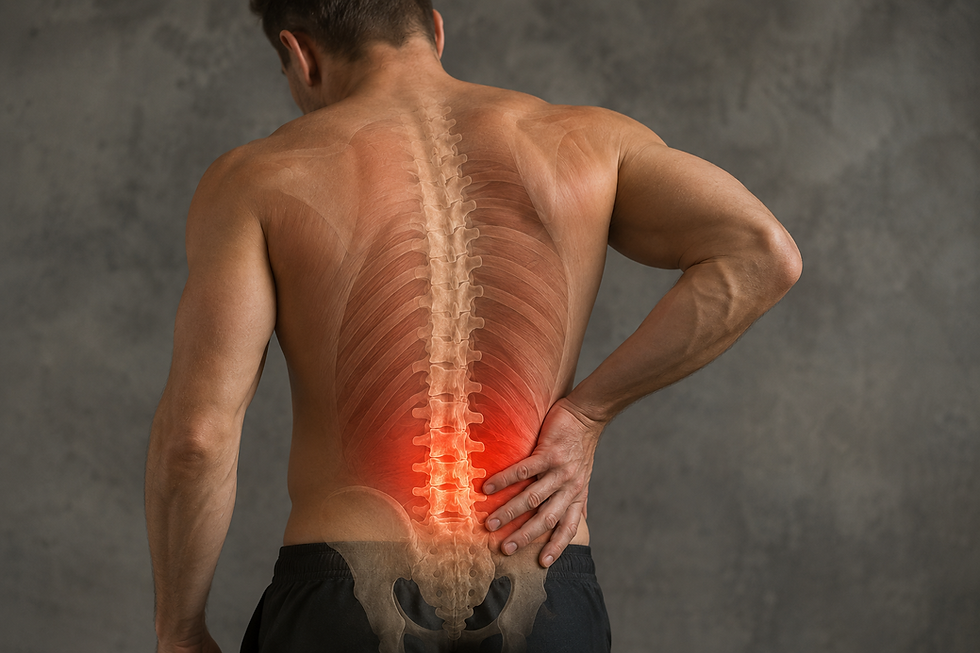
First off I want to make something very clear:
Back pain is very different for everybody.
What worked for me may not work for you. For me back pain has always been a muscle strain across my lower back from hinging improperly. Tiredness from heavy kettlebells can do that.
If you have pain shooting down your legs, numbness, tingling, weakness, or anything nerve-related, the rehab exercises could be completely different and you should get assessed properly.
But if you know without a shadow of a doubt that it's a muscle strain, keep on reading to find out how you can rehab your back!
How Back Pain Happens
For normal parents who don't do any type of intense exercise like I do, back pain happens from a combination of:
stress
fatigue
too much sitting
not enough movement
then one awkward movement finishes the job
Sometimes it’s picking something up like your kids. Sometimes twisting weird. Sometimes you wake up with it already angry.
I think a lot of parents can relate to that.
One minute you’re fine. The next minute putting socks on feels like an Olympic event.
To this day I still don't know how I put on my one piece firefighter uniform in the military when I had a bulged disc in my lower back!
But Here's What I DIDN’T Do
This is important.
I didn’t:
completely stop moving
lie in bed all day
stretch aggressively for an hour
panic Google symptoms
crush painkillers and hope for the best
I also didn’t try to “train through it.”
Instead, I focused on calming things down first.
The First 3 Days: Calm the Area Down
For the first three days, I kept things extremely simple.
I only did:
Hip Flexor Stretch
Side Plank Clam Shell Isometric
That’s it.
I performed them 7 times per day using the “Grease the Groove” method.
What Is Grease the Groove?
I talked about this in a previous blog, but here’s the quick version.
Grease the Groove is a concept made popular by Pavel Tsatsouline.
Instead of destroying yourself with one giant workout, you perform small amounts of movement frequently throughout the day.
Think:
practice, not punishment
quality over exhaustion
teaching the body to move well again
This works incredibly well for rehab because you’re constantly reminding the body:
“Hey, this movement is safe.”
You’re building confidence and improving movement without irritating things further.
For me, this looked like:
quick sessions
several times daily
never pushing into sharp pain
stopping before fatigue
That’s an important part people miss.
I wasn’t trying to “win rehab.”
I was trying to calm my body down.
Exercise 1: Hip Flexor Stretch
This stretch helps because tight hip flexors can absolutely crank on the lower back, especially if you sit a lot or spend time driving.
When my back gets angry, my hips are usually tight too.
I held the stretch for about 2 minutes per side.
Not aggressive. Just enough to open things up.
And honestly, after the first day, I could already feel some relief walking around.
Exercise 2: Side Plank Clam Shell Isometric
This one doesn’t look exciting, but it works.
The goal here was to wake up the glutes and stabilize the hips and core without irritating my back further.
A lot of lower back issues aren’t just about the back itself.
Sometimes:
the glutes aren’t doing their job
the core isn’t stabilizing properly
the hips are stiff
the low back picks up the slack
That’s where this exercise helped.
Again:
short sets
multiple times daily
never pushing to failure
Day 4-5: Time to Rebuild Stability
Once symptoms improved and I could move around better, I added the McGill Big Three.
I did these 3 times per day for the next two days.
These exercises are famous for a reason.
Dr. Stuart McGill has spent decades studying spine mechanics and low back pain, and these exercises are designed to improve core stability without placing excessive stress on the spine.
The goal isn’t to “blast your abs.”
The goal is to create stability so the back can calm down and function properly again.
The McGill Big Three
1. McGill Sit Up
This trains the anterior core while keeping the spine in a safer position.
I focused on:
bracing the core
controlled movement
short holds
Not cranking my neck forward trying to do a sit-up.
2. Side Plank
This trains lateral core stability and helps support the spine.
Again, short holds worked best.
When your back is irritated, more isn’t always better.
3. Bird Dog
This one teaches the body to stabilize while the limbs move.
Slow and controlled was key here especially that you want to focus on holding the movement for 6-10 seconds per repitition.
The biggest thing?
I focused on staying stiff through the torso while moving the arms and legs.
The Biggest Mistake People Make
People either:
do absolutely nothing
or
go way too hard too soon
Both usually backfire.
Your back likes movement.
It just likes the RIGHT amount of movement.
That’s why Grease the Groove worked so well for me.
I wasn’t annihilating myself with rehab sessions.
I was feeding my body small amounts of good movement throughout the day.
Why I Think This Worked So Fast
A few reasons:
1. I Started Immediately
I didn’t wait two weeks hoping it would magically disappear.
2. I Kept Moving
Movement improves blood flow, stiffness, and confidence.
3. I Didn’t Overdo It
No marathon rehab workouts.
Just consistent movement.
4. I Focused on Stability First
Before loading things heavily again, I made sure my core and hips were doing their job.
Final Thoughts
Back pain can be scary, frustrating, and exhausting.
But most of the time, your body isn’t broken.
It usually just needs:
better movement
more stability
less panic
and the right amount of activity
For me, this approach got me feeling normal again in about 5 days.
Not everyone’s rehab timeline will look the same, but hopefully this gives you a better idea of how powerful simple, consistent movement can be.
And if your back is angry right now: don’t underestimate the basics.
Sometimes the simple stuff works best.


Comments